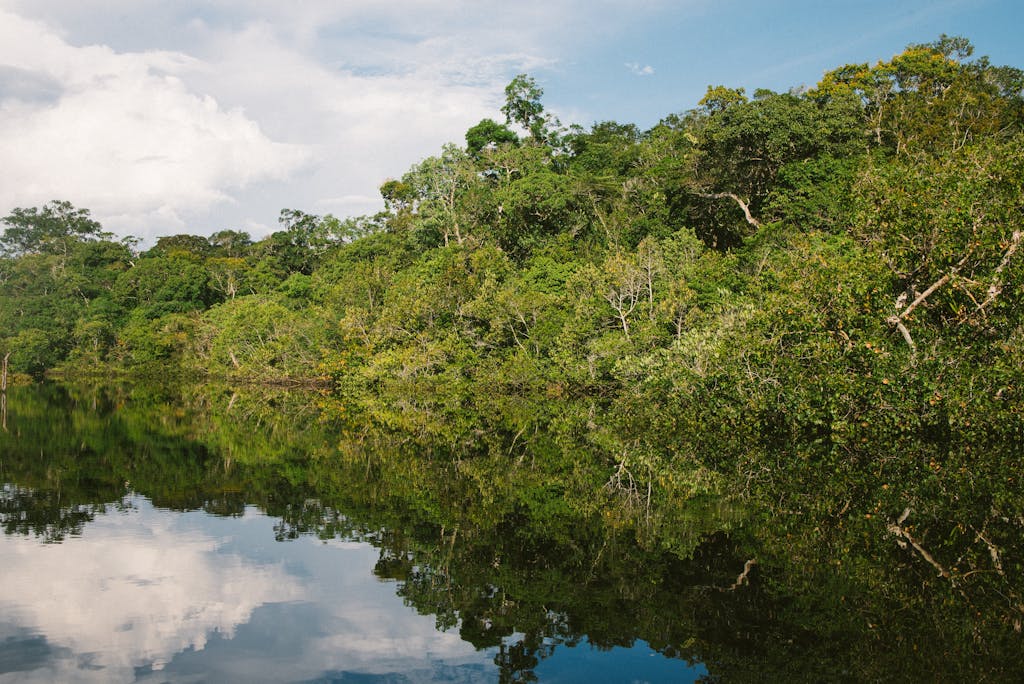
Protests in the North Brazil cities of Manaus, Porto Velho and Rio Branco continue into their third week as thousands of people gather in each city to demand better management of the environment in the area. North Brazil is the geographically largest of the Brazilian states and it is home to the Amazon rainforest, which is currently suffering from increased deforestation due to forest fires, logging, mining and cattle ranching.
The current government, led by the populist president Jair Bolsonaro, has openly dismissed the problems of the Amazon area while trying to boost the Brazilian economy. In fact, Bolsonaro himself has been accused of not condemning and actually silently supporting the exploitation of the Amazon area for industrial use.
The protesters demand that environmental laws should be enforced and permits for logging and mining should be controlled much more vigilantly than is currently done. Several environmentally hazardous mining and logging projects have been given a green light by the ministry of industry in recent years after it was merged together with the ministry of environment - a move by president Bolsonaro to speed up the development of the Amazon region, although at the expense of the natural environment.
The protesters also call for more control over illegal logging, which is currently a rather blatant activity in the remote areas of North Brazil to which the local police - often with the help of bribes - turns a blind eye to. Taking the matter into their own hands, a group of locals stopped a truck transporting timber from a well-known illegal logging site near Manaus and forced the driver to abandon the vehicle. There have been reports of other incidents as well involving intimidation of people involved in illegal activities in the area.
Three groups of people are most dominant amongst the protesters. Firstly there are the members of native peoples of the Amazon area who fear for the destruction of their traditional and largely self-sustained lifestyle. Secondly, there are the people working in the tourism industry who fear that potential tourists are put off from traveling to the area by the sad state of the Amazon rainforest. Lastly there are the small-scale, sustainable farmers whose livelihood depends on small patches of land, often illegally acquired or burnt down by large mining, cattle ranching or logging industries. These three groups of people are further supported by large numbers of urban citizens who are becoming increasingly aware of the environment and the importance of the Amazon area.
So far there has been little response from the government or president Bolsonaro regarding the protests. It remains to be seen whether the protests will amass even more people and if they will spread to more cities in the north of elsewhere.
